The Blood Pressure Rollercoaster: Understanding Food and Blood Pressure Patterns
Learn how meal choices, blood sugar fluctuations, and daily habits may influence blood pressure patterns throughout the day.
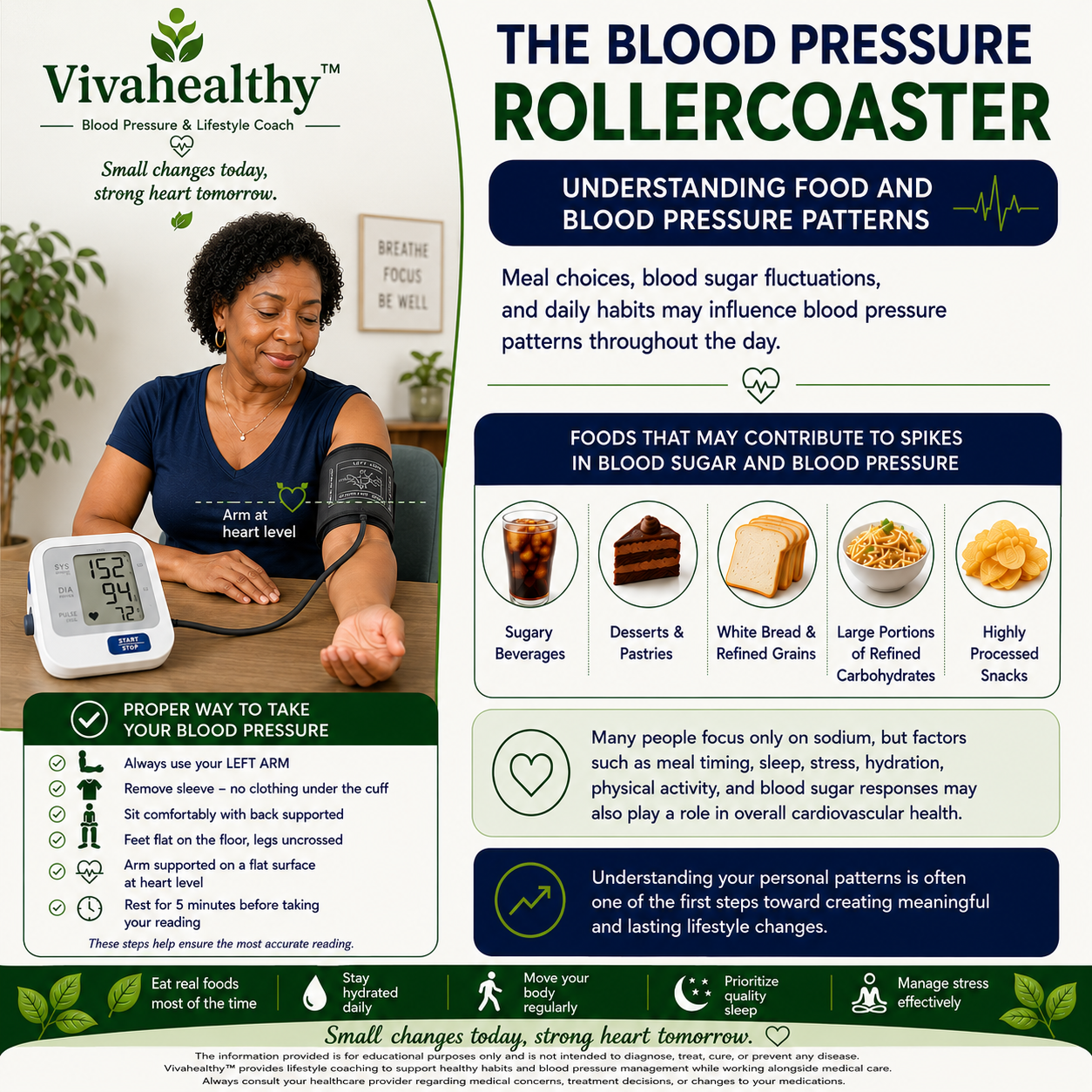
Have you ever noticed that your blood pressure seems higher after certain meals?
While blood pressure naturally fluctuates throughout the day, factors such as meal composition, portion size, sodium intake, and blood sugar responses may influence those fluctuations.
Research suggests that meals high in refined carbohydrates and added sugars can contribute to rapid increases in blood glucose levels. These changes may place additional demands on the body's regulatory systems and may influence blood pressure patterns in some individuals.
Common examples include:
• Sugary beverages
• Desserts and pastries
• White bread and highly processed grains
• Large portions of refined carbohydrates
• Highly processed snack foods
This does not mean these foods must be avoided completely. However, paying attention to how your body responds to different meals may help you better understand your blood pressure patterns.
Habits That May Support More Stable Blood Pressure Patterns
• Include vegetables with meals
• Stay adequately hydrated throughout the day
• Consider a short walk after meals
• Monitor your blood pressure consistently to identify patterns
Many people focus only on sodium, but factors such as meal timing, sleep, stress, hydration, physical activity, and blood sugar responses may also play a role in overall cardiovascular health.
Understanding your personal patterns is often one of the first steps toward creating meaningful and lasting lifestyle changes.
Small changes today, strong heart tomorrow.
Ready to Take the Next Step?
Schedule your Personalized Blood Pressure Strategy Call to discuss your situation, goals, and challenges and explore a personalized path toward lower and more stable blood pressure.
No obligation. No pressure. Just a conversation about your blood pressure and your next steps.
Disclaimer
The information provided in this article is for educational purposes only and is not intended to diagnose, treat, cure, or prevent any disease.
Vivahealthy™ provides lifestyle coaching designed to support healthy habits and blood pressure management while working alongside medical care.
Always consult your healthcare provider regarding medical concerns, treatment decisions, or changes to your medication
Sources & References
This article was reviewed against information from trusted organizations, including:
• American Heart Association (AHA)
• National Heart, Lung, and Blood Institute (NHLBI)
• Centers for Disease Control and Prevention (CDC)
• National Institute on Aging (NIA)
• Published research related to blood pressure, nutrition, blood sugar regulation, physical activity, and cardiovascular health.